Why Akron Basements Leak
The houses are old. The median home in Akron was built in 1954, and about 60% of homes predate 1960 (ACS 2024 5-year). Barberton is about the same, and in Cuyahoga Falls about 52% of homes predate 1960. Walls that old have had decades to crack, and their original drains may be clogged or missing.
It rains and freezes. The Akron-Canton airport records 41.57 inches of precipitation in a normal year, about 89 days with at least a tenth of an inch, and about 120 days with a low below freezing (NOAA 1991-2020). Water in the soil against a wall, freezing and thawing, works on cracks and joints.
Big storms happen. On August 8, 2024, moisture from Tropical Storm Debby dropped 3 to 5 inches across the area, with 6.98 inches reported in Hudson. The National Weather Service reported that hundreds if not thousands of basements flooded in Summit County.
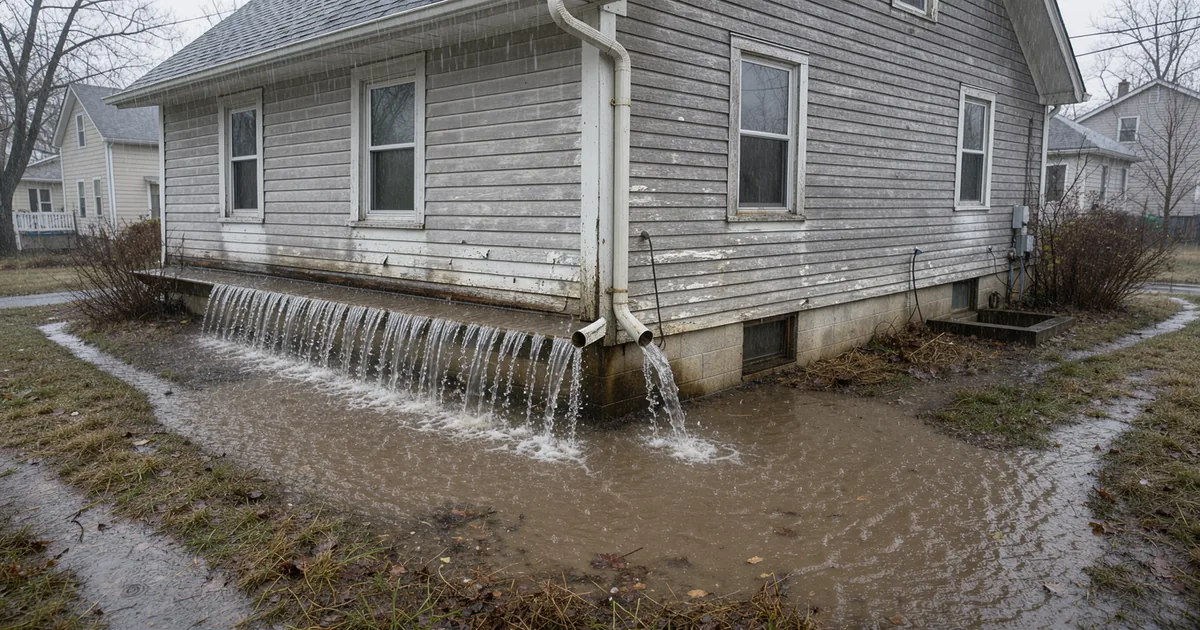
Roof water lands next to the wall. A 1,000-square-foot roof sheds about 623 gallons per inch of rain. Short downspouts send that water straight to the foundation; see downspout and yard drainage.
Some water is sewage. Akron's sewer brochure says most backups come from a plugged sanitary lateral, which the owner maintains. Water from the floor drain needs a backwater valve or lateral repair, not drain tile.